By CARLA K. JOHNSON AP Medical Writer
As winter approaches and daylight hours grow shorter, people prone to seasonal depression can feel it in their bodies and brains.
The millions of people estimated to have seasonal affective disorder, or SAD, typically have episodes of depression that begin in the fall and ease in the spring or summer. One trigger for SAD is when clocks revert to standard time, which happened Sunday across much of the U.S., bringing darker afternoons. A milder form, subsyndromal SAD, is recognized by medical experts, and there’s also a summer variety of seasonal depression, though less is known about it.
In 1984, a team led by Dr. Norman Rosenthal, then a researcher at the National Institutes of Health, first described SAD and coined the term. “I believe that because it is easy to remember, the acronym has stuck,” he said.
Scientists are trying to understand what causes SAD
No single cause for seasonal affective disorder has been identified. The disorder affects many more women than men, according to the NIH. Symptoms can be similar to depression, and can include persistent feelings of hopelessness or pessimism and difficulty concentrating, remembering, or making decisions.
In one effort to better understand what’s going on, scientists are learning how specialized cells in our eyes turn the blue wavelength part of the light spectrum into neural signals affecting mood and alertness.
Sunlight is loaded with the blue light, so when the cells absorb it, our brains’ alertness centers are activated and we feel more wakeful and possibly even happier.
Researcher Kathryn Roecklein at the University of Pittsburgh tested people with and without SAD to see how their eyes reacted to blue light. As a group, people with SAD were less sensitive to blue light than others, especially during winter months. That suggests one possible cause for wintertime depression.
When days get shorter, powerful light can help
Many people with SAD respond to light therapy, said Dr. Paul Desan of Yale University’s Winter Depression Research Clinic. The therapy can involve exposure to bright light for about a half hour in the morning, powered by devices that emit light about 20 times brighter than regular indoor light.
Research supports using a light that’s about 10,000 lux, a measure of brightness. You need to use it for 30 minutes every morning, according to the research. Desan said this can help not only people with SAD but also those with less-severe winter blahs.
Special lights run from $50 to more than $400. Some products marketed for SAD are too dim to do much good, Desan said.
Yale has tested products and offers a list of recommendations, and the nonprofit Center for Environmental Therapeutics has a consumer guide to selecting a light.
If your doctor diagnosed you with SAD, check with your insurance company to see if the cost of a light might be covered.
Talk therapy and medication can also help some with SAD
Antidepressant medications are a first-line treatment for SAD, along with light therapy. Doctors also recommend keeping a regular sleep schedule and walking outside, even on cloudy days.
Light therapy’s benefits can fade when people stop using it. One type of talk therapy — cognitive behavioral therapy, or CBT — has been shown in studies to have more durable effects, University of Vermont researcher Kelly Rohan said.
CBT involves working with a therapist to identify and modify unhelpful thoughts.
Working with a therapist can help people take small steps toward having fun again, Rohan said. Try planning undemanding but enjoyable activities to break out of hibernation mode, including getting out and seeing a friend for coffee.
___
Carla K. Johnson, the principal writer of this story, retired from The Associated Press in 2025.
___
The Associated Press’ health and science coverage receives financial support from the AP Fund for Journalism and private foundations. AP is solely responsible for all content. Find AP’s standards for working with philanthropies, a list of supporters and funded coverage areas at AP.org
News
Shorter days and dark afternoons can trigger depression. Here’s how to fight back
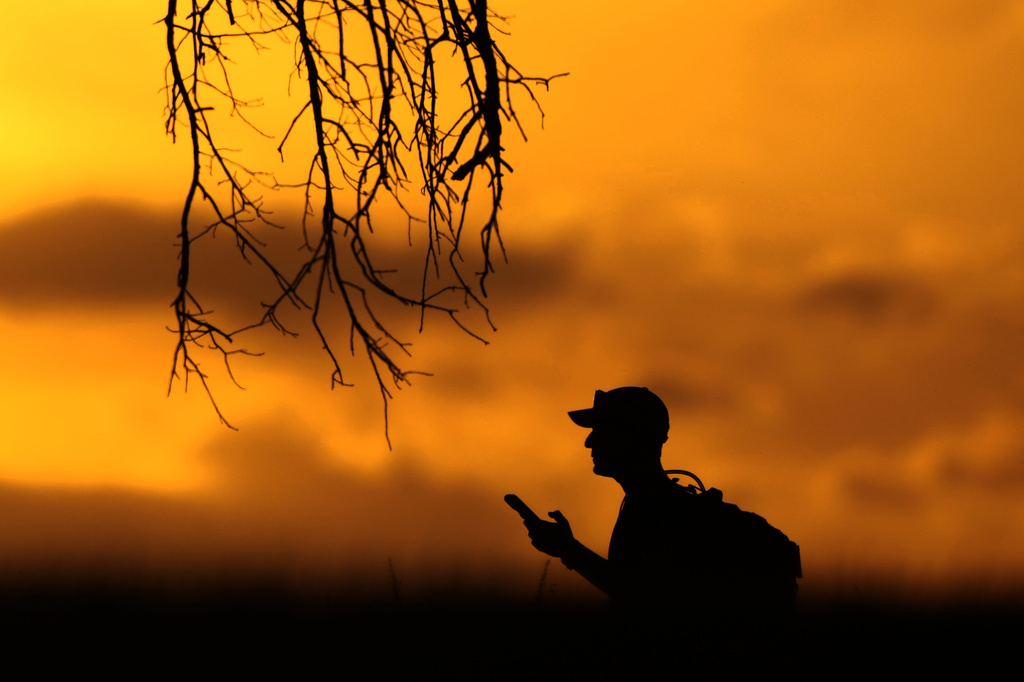
A man looks at his phone while hiking in a park during sunset Thursday, Oct. 29, 2026, in Lenexa, Kan. (AP Photo/Charlie Riedel) Photo: Associated Press